


18/05/2026
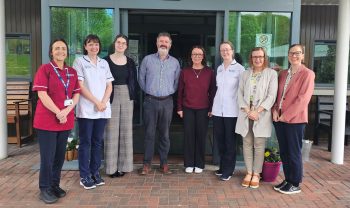
Dr Siobhan Palmer, Consultant Clinical Neuropsychologist and Clinical Lead for the Western Trust Community Acquired Brain Injury Rehabilitation Team.
What is brain injury?
Injury to the brain usually occurs suddenly, as the result of trauma or illness. It frequently causes changes in thinking skills, emotion regulation, communication skills and physical functioning. Often the difficulties are invisible (both to the public and on occasion also to the injured individual) but these changes can be very disabling. A brain injury not only impacts the individual but also their family, friends and wider social connections. The brain injury rehabilitation team is a specialist service whose vision is to support people to rebuild their lives after injury, to re-engage in meaningful activity and reconnect with their lives again.
Tell us a little bit about yourself and your background?
I was delighted to join the community acquired brain injury rehabilitation team (CABIRT) in April 2025 and they have made me so welcome. My predecessor was the lovely and very highly respected Dr Shane McCarney who had built a warm, dedicated and specialist rehabilitation team. He leaves big shoes to fill and I’m giving it everything I’ve got. I came here to be closer to my family after working in a similar service in New Zealand since 2018. It’s been a really exciting year for me as I’ve started to settle into the rhythm of living and working in the northern hemisphere again.
I’ve worked in brain injury rehabilitation since 2000, moving between in inpatient and community settings. I started my career at The Priory and then my first job after qualifying was in the Oliver Zangwill Centre and then with BIRT (now BrainKind). I specialised in epilepsy at St Georges Hospital in London for three years then moved to New Zealand. I’m an honorary lecturer at Queens University Belfast.
I first ran a brain injury family support group in 2001 with my supervisor at the time and that was a lightbulb moment for me. Ever since, I have held the family experience in mind and been conscious of the huge impact the effects of brain injury can have on relationships with family, friends, colleagues and the person’s own relationship with themselves. I’ve met various likeminded professionals along the way and together published various articles, chapters and books with them on this subject.
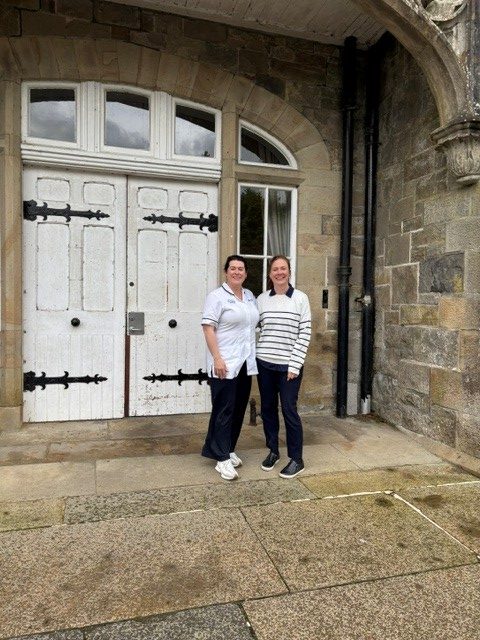 Can you tell us a little bit, about what you do in your day-to-day job?
I spend most of my days chatting! I offer talking therapy to help individuals and their families understand the effects of brain injury and learn ways to adapt their lives to reduce the impact of this. I chat with my colleagues to reflect on how we’re doing, to think about how we can best help people and how we can continue to move the service forward, to offer the best that we can with the resources that we have, in a sustainable way. I do assessments of memory and emotion, and help people understand why they’re feeling what they’re feeling. I see patients in the NWCNR, in Omagh and in Enniskillen. I drink a lot of coffee and ginger tea. As the clinical lead for the service, I am responsible for lots of other parts of the service and my role is to share a vision for the service and help us to move towards that as a team which is very rewarding and fulfilling.
What is the most challenging aspect of your job?
I have to learn to be patient and take things one step at a time, I can sometimes be a bit too enthusiastic and want to do everything straight away so sometimes I run out of energy and have to stop and recharge, but this means I’m human too and that’s okay.
What is the most rewarding aspect of your job?
Seeing our patients do well and get back to doing the things that make their lives meaningful.
Can you recall your happiest moment or moments to date in your job?
One of my happiest moments was actually seeing the audience cry when a folk singer I worked with for months performed a song from her new album ‘songs of survival’ at a brain injury conference. I was happy because she was writing and performing again for the first time since her traumatic accident and with the support of the rehab team she had returned to music and effectively conveyed the raw emotion of her own recovery from brain injury through song. She is releasing her album later this year.
What would you say to someone who was considering following in your footsteps?
Come and talk to me about it! In my opinion, working with people with brain injury is the most varied and interesting choice of career but be prepared for it to take over your life because there is always more to learn.
Can you tell us one thing about yourself that people might not know? (e.g. outside interest, hobby, family, sport, likes, dislikes)
I ran an ultra-marathon last year in a beautiful part of New Zealand with lakes and mountains and geysers. One day I would like to run 100 miles, possibly in Chamonix, France!
If you had one wish in life, what would it be?
I don’t really know. That’s a bit like asking what’s my favourite song or favourite food and these things change all the time. I would like the southern hemisphere to be closer to the northern hemisphere so I could see my friends more. I would like to be fluent in multiple languages. Most of all, I guess I would genuinely like people to be kinder to themselves and to each other.
Can you remember your first patient? First day?
Yes, definitely and I remember this patient’s story vividly.